
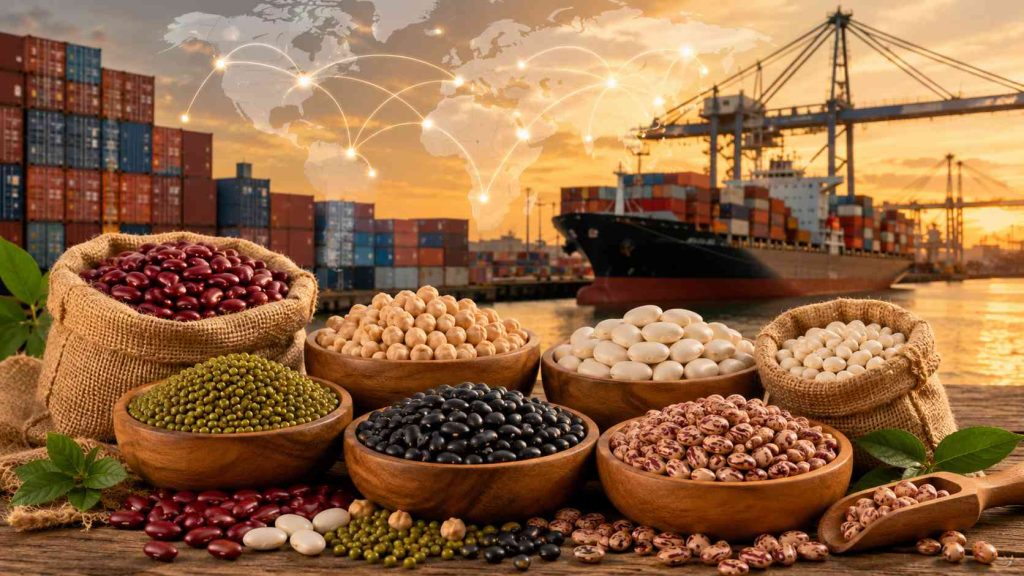
Beans are among the most widely consumed pulses in the global food industry. They are an important source of plant-based protein, carbohydrates, dietary fiber, vitamins, and minerals and are used in traditional cuisines, canned foods, ready meals, salads, soups, snacks, and modern plant-based food products.
From an international trade perspective, however, beans are not a single standardized product. Different varieties have different colors, sizes, cooking characteristics, applications, consumer preferences, and target markets.
For exporters, identifying the right combination of bean variety, product specification, buyer type, and destination market can significantly improve the chances of developing sustainable international business.
This article introduces the major commercial types of dried beans and explores some of the most promising markets for bean exporters around the world.
Why Are Beans Important in International Trade?
Beans are consumed in almost every region of the world, but consumption patterns vary considerably.
In Latin America, beans are a staple part of everyday diets. In Europe, white beans and kidney beans are widely used in traditional dishes, canned foods, salads, and ready meals. In the Middle East and North Africa, beans are important ingredients in traditional recipes and food-service markets. In Asia, different varieties are used in both household consumption and industrial food processing.
Global demand is also being supported by broader food trends, including:
- Growing interest in plant-based protein
- Increased demand for vegetarian and vegan foods
- Expansion of convenient and ready-to-eat products
- Demand for affordable sources of protein
- Growth in healthy and high-fiber diets
- Development of bean-based snacks and ingredients
- Increased consumption of canned and packaged pulses
As a result, opportunities exist for both bulk commodity suppliers and exporters targeting premium, processed, organic, retail, or private-label markets.
Major Types of Beans in International Trade
Although hundreds of bean varieties are cultivated around the world, several commercial categories are particularly important in international trade.
1. Red Kidney Beans
Red kidney beans are among the most recognizable commercial bean varieties.
They have a distinctive dark-red color and kidney-shaped appearance and are commonly sold in both dried and canned forms.
Common Uses
Red kidney beans are widely used in:
- Chili dishes
- Soups
- Salads
- Rice dishes
- Ready meals
- Canned bean products
- Vegetarian foods
- Traditional cuisines
Their attractive color and ability to maintain their shape after cooking make them particularly valuable for retail and food-service applications.
Potential Buyers
Potential customers include:
- Bean importers
- Food wholesalers
- Canning companies
- Ready-meal manufacturers
- Supermarket suppliers
- Private-label packers
- Restaurants and food-service distributors
Potential Export Markets
Red kidney beans can have strong potential in:
- European Union
- United Kingdom
- Turkey
- Middle Eastern countries
- North Africa
- South Asia
- North America
European demand is especially relevant because kidney beans are widely used in canned products, retail packs, salads, and ready meals.
2. White Beans
White beans include several commercial varieties and sizes, including navy beans, pea beans, small white beans, and larger white bean types.
They are an important category in both household consumption and industrial food processing.
Common Uses
White beans are frequently used in:
- Baked beans
- Canned foods
- Soups
- Stews
- Mediterranean dishes
- Salads
- Purees
- Ready-to-eat meals
One of the largest industrial applications is canned beans, particularly in developed retail markets.
Potential Buyers
Potential customers include:
- Canning factories
- Food manufacturers
- Importers
- Wholesale distributors
- Private-label manufacturers
- Supermarket suppliers
- Food-service companies
Potential Export Markets
Promising regions include:
- United Kingdom
- Italy
- Spain
- Portugal
- Other European countries
- Turkey
- Middle East
- North Africa
Europe is particularly important for white beans. According to CBI market research, Italy, Spain, the United Kingdom, and Portugal are major European consumers of common dry beans, while the region continues to depend on imports for several bean varieties.
3. Black Beans
Black beans are small to medium-sized beans with a dark black skin and creamy interior.
They are strongly associated with Latin American cuisine but have become increasingly popular in other regions because of their nutritional value and use in modern healthy foods.
Common Uses
Black beans are used in:
- Mexican-style dishes
- Rice and bean meals
- Burritos and tacos
- Soups
- Salads
- Plant-based burgers
- Ready meals
- Canned foods
Potential Buyers
Typical customers include:
- Latin American food distributors
- Mexican food manufacturers
- Restaurants
- Ready-meal companies
- Canning companies
- Healthy-food brands
- Retail packers
Potential Export Markets
Strong opportunities may exist in:
- United States
- Mexico
- Canada
- European specialty-food markets
- United Kingdom
- Food-service markets worldwide
Exporters should note that countries such as Mexico have their own significant domestic bean production, so import demand can vary depending on harvest conditions, domestic prices, and trade policies.
4. Pinto Beans
Pinto beans are characterized by their beige background and reddish-brown speckled pattern.
They are extremely popular in North American and Latin American cuisine.
After cooking, their color becomes more uniform and they develop a soft, creamy texture.
Common Uses
Pinto beans are commonly used in:
- Refried beans
- Mexican dishes
- Burritos
- Soups
- Stews
- Canned foods
- Restaurant meals
- Retail pulse packages
Potential Buyers
Potential buyers include:
- Mexican and Latin American food companies
- Food-service distributors
- Wholesalers
- Canning manufacturers
- Retail brands
- Importers
Potential Export Markets
Important markets can include:
- Mexico
- United States
- Canada
- Latin America
- Selected European ethnic-food markets
Mexico deserves particular attention as a major international bean market.
International trade data show that Mexico imported approximately 388.6 thousand tonnes of dried kidney and white pea beans under HS 071333 in 2024, worth about US$493 million. The United States, Canada, Argentina, and Brazil were its main suppliers in this trade category.
Although trade classifications do not always separate every retail bean variety individually, the figures demonstrate the scale of Mexico’s international dried-bean trade.
5. Small Red Beans
Small red beans are smaller than standard kidney beans and usually have a uniform red color.
They are widely used in traditional cuisines and may appeal strongly to buyers serving ethnic and regional food markets.
Common Uses
They can be used in:
- Rice and bean dishes
- Soups
- Stews
- Traditional recipes
- Canned products
- Retail pulse packs
Potential Markets
Potential markets may include:
- Central America
- Caribbean countries
- United States
- Middle Eastern markets
- Ethnic-food markets in Europe
For exporters, identifying the exact size and color requirements of the buyer is especially important because small red beans and kidney beans may serve different consumer segments.
Major Potential Markets for Bean Exporters
Understanding the product is only one part of a successful export strategy. Exporters must also identify markets where import demand, consumer preferences, regulations, and logistics match their capabilities.
Mexico: One of the World’s Largest Bean Import Markets
Beans are a fundamental part of Mexican cuisine, making Mexico one of the most strategically important markets in global bean trade.
In 2024, Mexico was the world’s largest reported importer under the international trade category covering dried kidney beans and white pea beans, with imports of approximately 388.6 thousand tonnes valued at US$493 million.
Potential buyers include:
- Large importers
- Commodity traders
- Food distributors
- Retail packers
- Industrial processors
- Restaurant suppliers
However, exporters targeting Mexico must carefully monitor domestic harvest conditions because local production can strongly influence annual import requirements.
European Union: A Large and Diversified Market
Europe provides significant opportunities for bean exporters because consumption is spread across retail, food-service, industrial processing, and ethnic-food markets.
The European Union imported approximately 332.6 thousand tonnes of dried kidney and white pea beans under HS 071333 during 2024, with a reported trade value of around US$480 million.
European demand is particularly interesting for:
- Red kidney beans
- White beans
- Specialty beans
- Organic beans
- Retail-packed products
- Canning-grade beans
- Ready-meal ingredients
CBI identifies Italy, the United Kingdom, Spain, and Portugal as particularly important European markets for common dry beans. Demand is also supported by interest in plant-based protein and bean-based convenience products.
Italy
Italy is one of Europe’s most important individual bean markets.
In 2024, Italy imported approximately 133.6 thousand tonnes of dried kidney and white pea beans, worth almost US$190 million.
Italian cuisine traditionally uses several types of beans in:
- Soups
- Pasta dishes
- Salads
- Stews
- Regional recipes
This creates opportunities for standard commercial beans as well as higher-quality and specialty varieties.
United Kingdom
The United Kingdom represents an attractive market because beans are consumed through several different channels.
White beans are particularly important because of the country’s large baked-bean and canned-food market, while kidney and black beans are widely used in international cuisine, vegetarian meals, and ready-to-eat products.
In 2024, UK imports under the dried kidney and white pea bean category were valued at more than US$86 million. Canada was the dominant supplier, followed by the United States and several other origins.
Potential UK customers include:
- Canning companies
- Food manufacturers
- Retail brands
- Ethnic-food wholesalers
- Restaurant suppliers
- Private-label businesses
- Plant-based food companies
Turkey
Turkey can function as both a consumer market and a regional trading and processing hub.
In 2024, Turkey imported approximately 90.2 thousand tonnes of dried kidney and white pea beans, valued at about US$127 million.
Potential opportunities include:
- White beans
- Red kidney beans
- Other common dry beans
- Beans for packaging
- Beans for industrial processing
Turkey’s geographical position also provides access to wider markets across the Middle East, Europe, Central Asia, and North Africa.
India
India is best known internationally for its enormous demand for pulses such as chickpeas and lentils, but beans also represent an important import category.
In 2024, India imported approximately 139.3 thousand tonnes of dried kidney and white pea beans, worth about US$155 million.
India also imported approximately 165.4 thousand tonnes of other dried shelled beans classified under HS 071339, worth nearly US$129 million.
The country’s large population and established pulse-processing sector provide opportunities for exporters capable of supplying:
- Competitive bulk volumes
- Standardized quality
- Reliable specifications
- Consistent availability
However, import duties, domestic production, government policies, and seasonal market conditions should always be monitored before targeting India.
Algeria and North Africa
North Africa is another important region for dry bean exports.
Algeria imported approximately 79.9 thousand tonnes of dried kidney and white pea beans in 2024, with a reported value of more than US$114 million.
The region offers potential for:
- White beans
- Kidney beans
- Bulk commodity beans
- Retail-packed products
- Food-service supplies
Potential customers include major food importers, wholesalers, distributors, supermarkets, and packaging businesses.
Competitive pricing and dependable supply can be particularly important in these markets.
United States
The United States is simultaneously a major producer, exporter, consumer, and importer of beans.
Under the international category for other dried shelled beans, the United States imported approximately 136 thousand tonnes in 2024, valued at about US$172 million.
The American market can be particularly interesting for:
- Black beans
- Pinto beans
- Specialty varieties
- Organic beans
- Ethnic-food products
- Processed bean ingredients
Because domestic production is significant, foreign suppliers usually need a clear competitive advantage in price, variety, seasonality, certification, quality, or specialty positioning.
Pakistan and South Asia
Pakistan is another potential market for certain dry bean categories.
In 2024, Pakistan imported approximately 53.5 thousand tonnes of other dried shelled beans under HS 071339, valued at more than US$36 million.
Potential buyers include:
- Pulse importers
- Wholesalers
- Food processors
- Retail distributors
- Commodity traders
Price competitiveness, product purity, shipping costs, and availability are especially important in price-sensitive South Asian markets.
Matching Bean Varieties with Potential Markets
Exporters can improve their sales strategy by matching specific bean varieties with the markets most likely to require them.
Red Kidney Beans
Potential markets:
- European Union
- United Kingdom
- Turkey
- Middle East
- North Africa
- South Asia
Best buyer categories:
- Canners
- Food manufacturers
- Wholesalers
- Retail packers
White Beans
Potential markets:
- United Kingdom
- Italy
- Spain
- Portugal
- Turkey
- Algeria
- Middle East
Best buyer categories:
- Canning companies
- Private-label suppliers
- Food processors
- Retailers
Black Beans
Potential markets:
- United States
- Mexico
- Canada
- United Kingdom
- European ethnic-food markets
Best buyer categories:
- Mexican food manufacturers
- Restaurants
- Healthy-food brands
- Canning businesses
Pinto Beans
Potential markets:
- Mexico
- United States
- Canada
- Central America
Best buyer categories:
- Importers
- Food-service companies
- Latin American food brands
- Canners
Small Red Beans
Potential markets:
- Caribbean countries
- Central America
- United States
- Selected European and Middle Eastern markets
Best buyer categories:
- Ethnic-food wholesalers
- Retail packers
- Importers
- Traditional food manufacturers
What Do International Bean Buyers Look For?
Finding a country with strong import demand is only the beginning.
Professional buyers usually evaluate several product and supplier characteristics before placing orders.
Product Variety
The exact bean variety must be clearly identified.
Two beans that appear similar may have significantly different cooking characteristics and commercial value.
Size and Uniformity
Professional buyers may specify exact calibration or size ranges.
Uniformity is particularly important for:
- Retail packaging
- Canning
- Automated food processing
- Premium food products
Color
Buyers expect beans to have a uniform and characteristic color without excessive discoloration or damaged seeds.
Color sorting can therefore significantly increase the commercial value of export-quality beans.
Moisture
Proper moisture levels help protect the beans during storage and long-distance transportation.
Excessive moisture can increase the risk of deterioration and quality problems.
Purity
Export-quality beans should have low levels of:
- Foreign matter
- Stones
- Broken beans
- Damaged grains
- Insect-damaged beans
- Discolored beans
Cleaning, grading, and color sorting are therefore important stages in preparing beans for international markets.
Cooking Performance
Industrial buyers may evaluate:
- Cooking time
- Water absorption
- Texture
- Skin integrity
- Uniformity after cooking
Canning companies often have especially detailed technical specifications.
Food Safety and Export Compliance
Compliance becomes increasingly important when targeting regulated markets such as the European Union.
European market requirements for dry beans include food-safety controls, traceability, pesticide residue limits, contaminant limits, packaging rules, and labelling requirements. Buyers may also request internationally recognized food-safety certifications.
Depending on the buyer and destination, exporters may need documents or certifications such as:
- Certificate of Origin
- Phytosanitary Certificate
- Certificate of Analysis
- Laboratory test results
- Fumigation Certificate
- Quality Certificate
- Commercial Invoice
- Packing List
- Bill of Lading
- Food-safety certification
Requirements should always be confirmed before shipment because they differ between destinations.
Main Types of Potential Bean Buyers
Bean exporters should avoid searching only for generic “bean buyers.”
More targeted customer identification can produce better results.
Potential B2B customers include:
- Pulse importers
- Commodity trading companies
- Bean wholesalers
- Canning companies
- Food manufacturers
- Retail packaging companies
- Private-label suppliers
- Supermarket distributors
- Ready-meal manufacturers
- Restaurant suppliers
- Ethnic-food distributors
- Organic food companies
- Plant-based food manufacturers
- Institutional food-service suppliers
Each buyer category has different priorities.
A bulk commodity importer may prioritize price, volume, and shipment timing, while a European retail supplier may place greater importance on traceability, certifications, appearance, packaging, and consistency.
How to Select the Right Export Market
High import volume does not necessarily mean that a market is suitable for every supplier.
Before entering a new country, exporters should evaluate:
- Annual import volume
- Preferred bean varieties
- Domestic production
- Main competing origins
- Average market prices
- Import tariffs
- Food-safety regulations
- Packaging requirements
- Shipping costs
- Transit time
- Payment methods
- Required certifications
- Buyer concentration
- Seasonal demand
- Currency risks
- Political and trade conditions
A market that imports smaller quantities but pays more for premium quality may sometimes be more attractive than a high-volume market where competition is based almost entirely on price.
From Bean Supplier to Long-Term Export Partner
International buyers increasingly expect suppliers to provide more than just competitive pricing.
Long-term cooperation depends on:
- Stable product quality
- Accurate specifications
- Reliable supply
- Transparent communication
- Competitive pricing
- Professional documentation
- Flexible packaging
- Traceability
- Efficient logistics
- Responsive customer service
Exporters that consistently deliver these elements can build stronger commercial relationships and improve their chances of receiving repeat orders.
Conclusion
The global market for dried beans offers opportunities across a wide range of countries and customer segments.
Red kidney beans, white beans, black beans, pinto beans, and small red beans each serve different culinary traditions, industrial applications, and buyer groups.
Major markets such as Mexico, the European Union, Italy, the United Kingdom, Turkey, India, Algeria, the United States, and Pakistan demonstrate that international demand for beans is geographically diverse.
However, successful bean exporting requires more than simply identifying countries that import large quantities.
The strongest opportunities emerge when exporters match the right bean variety with the right buyer and market, while providing consistent quality, competitive specifications, reliable logistics, proper documentation, and professional communication.
For suppliers capable of meeting these requirements, international bean trade can provide both high-volume opportunities and long-term relationships with importers, processors, wholesalers, and food manufacturers.
Looking for a reliable supplier of red kidney beans, white beans, black beans, pinto beans, or other dried bean varieties? Legumeland provides professional sourcing and export solutions based on your required specifications, quantities, packaging, and destination market. Contact us to discuss your bean sourcing requirements and potential business cooperation.