
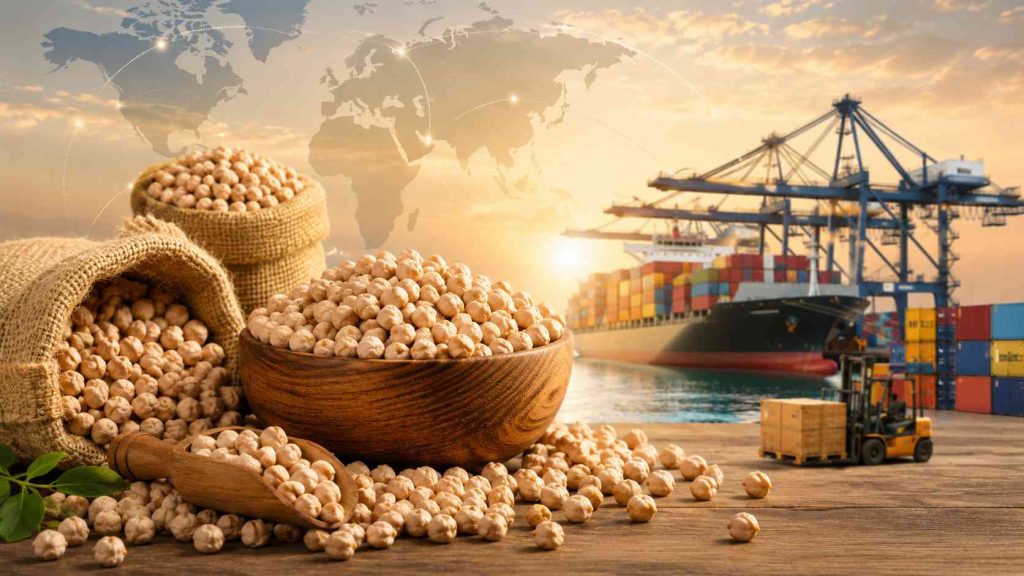
Chickpeas are among the most widely traded pulses in the international food market. Their strong presence in traditional diets, combined with the growing demand for plant-based protein, healthy foods, gluten-free ingredients, and convenient food products, has created significant opportunities for chickpea suppliers and exporters.
For companies looking to expand their presence in international markets, understanding who the potential chickpea buyers are, which countries offer attractive export opportunities, and what professional buyers expect from their suppliers is essential.
The Growing Importance of Chickpeas in Global Trade
Chickpeas are consumed in many forms, including whole dried chickpeas, canned chickpeas, hummus, chickpea flour, snacks, ready-to-eat meals, salads, and traditional dishes.
Demand is driven by several different consumer groups. In Middle Eastern and Mediterranean countries, chickpeas have long been an important part of traditional cuisine. At the same time, consumers in Europe and North America increasingly use chickpeas as a source of plant-based protein and as an ingredient in vegetarian, vegan, and gluten-free products.
International trade figures demonstrate the scale of this opportunity. In 2024, some of the world’s largest import markets for dried chickpeas included India, Pakistan, Turkey, Algeria, and the European Union. India alone imported more than 528 thousand tonnes, while Pakistan imported approximately 409 thousand tonnes and Turkey nearly 280 thousand tonnes.
These figures show that chickpea exporters can target both established high-volume markets and growing premium markets.
Who Are the Potential Buyers of Chickpeas?
Finding the right buyer is one of the most important steps in developing a successful export strategy. Chickpeas move through several different channels before reaching the final consumer.
1. Importers and Commodity Traders
Specialized pulse importers and commodity trading companies are among the most important potential customers for chickpea exporters.
These companies usually purchase chickpeas in bulk quantities and distribute them to wholesalers, food processors, packers, retailers, and other buyers in their local markets.
For exporters entering a new country, working with an experienced importer can provide faster access to established distribution networks.
In Europe, specialized dry-ingredient importers, pulse traders, brokers, brands, and packers are among the main channels through which chickpeas enter the market.
2. Food Manufacturers
Food manufacturers represent another important customer segment.
Chickpeas are increasingly used as ingredients in:
- Hummus
- Ready-to-eat meals
- Soups and salads
- Plant-based foods
- Chickpea pasta
- Chickpea flour
- Gluten-free foods
- Protein-rich snacks
- Canned food products
Industrial buyers often require consistent specifications because the chickpeas must perform reliably during cooking, grinding, canning, or other processing operations.
This makes consistency in size, moisture, color, cleanliness, cooking characteristics, and overall quality particularly important.
3. Hummus Producers
The global popularity of hummus has created a specialized market for chickpea suppliers.
Hummus manufacturers typically look for chickpeas with suitable cooking characteristics, uniform size, good color, and reliable availability.
Large-scale hummus producers may purchase considerable quantities throughout the year, making them attractive prospects for exporters capable of maintaining consistent supply.
4. Canning Companies
Canned chickpeas are widely sold by supermarkets, food-service distributors, and international food brands.
Canning companies therefore represent another valuable category of potential buyers.
Their purchasing decisions may depend on characteristics such as:
- Uniform grain size
- Cooking performance
- Skin integrity
- Moisture level
- Color
- Defect percentage
- Foreign matter
- Consistency between shipments
Exporters that understand the technical requirements of industrial processing can develop stronger long-term relationships with these customers.
5. Wholesalers and Food Distributors
Wholesalers supply restaurants, supermarkets, ethnic grocery stores, food-service companies, and independent retailers.
In markets where chickpeas are frequently consumed in traditional cuisine, wholesalers can handle substantial volumes.
Middle Eastern, Mediterranean, South Asian, and North African food distributors can therefore be particularly relevant targets for exporters.
6. Retail Brands and Private-Label Packers
Some retail brands and packaging companies import chickpeas directly before cleaning, sorting, packing, and selling them under their own brands.
These buyers may require higher levels of documentation, packaging flexibility, traceability, food-safety compliance, and consistency.
For exporters able to meet these requirements, private-label and retail supply chains may provide opportunities to move beyond pure commodity trading and establish longer-term commercial relationships.
7. Chickpea Flour and Ingredient Manufacturers
The growing use of chickpea flour is creating another potential export channel.
Chickpea flour is used in gluten-free foods, bakery products, snacks, pasta, protein-rich formulations, and traditional recipes.
Ingredient manufacturers may therefore purchase chickpeas specifically for milling and further processing.
For suppliers, this segment can provide an additional market for chickpeas that meet industrial processing specifications.
Promising Markets for Chickpea Exporters
Although chickpeas are traded globally, several regions deserve particular attention.
India and Pakistan: High-Volume Markets
India and Pakistan are major consumers of pulses and can become significant chickpea importers when domestic supply does not fully satisfy market requirements.
According to 2024 international trade data, India and Pakistan were the two largest reported importers of dried chickpeas by volume, with imports of approximately 528 thousand tonnes and 409 thousand tonnes respectively.
These markets offer substantial volume potential, although exporters must closely monitor local production, import policies, prices, tariffs, and seasonal market conditions.
Turkey: A Major Regional Trading Hub
Turkey represents another important chickpea market.
In 2024, the country imported approximately 279.6 thousand tonnes of dried chickpeas, with major suppliers including Russia, Mexico, Canada, India, and the United States.
Turkey is important not only because of domestic consumption but also because of its established food-processing and regional trading activities.
Exporters looking at the wider Middle Eastern and Mediterranean markets should therefore pay close attention to Turkish demand.
Middle East: Strong and Consistent Consumption
Countries across the Middle East have strong cultural demand for chickpeas because products such as hummus, falafel, soups, and traditional dishes are widely consumed.
Saudi Arabia, Jordan, Qatar, Bahrain, and other Gulf and regional markets can provide attractive opportunities for suppliers.
Saudi Arabia, for example, imported more than 78 thousand tonnes of dried chickpeas in 2024, according to international trade data.
Buyers in these markets may include large food importers, wholesalers, food-service suppliers, hummus manufacturers, and retail packaging companies.
Algeria and North Africa
North Africa represents another significant destination for pulses.
Algeria was among the world’s largest chickpea importers in 2024, purchasing approximately 169.5 thousand tonnes.
Countries in this region combine strong traditional consumption with substantial demand from wholesalers and food distributors, creating opportunities for competitive exporters capable of reliable bulk supply.
European Union
Europe offers a different type of opportunity.
Although volume remains important, European buyers increasingly focus on food safety, traceability, sustainability, residue control, certifications, and consistent quality.
The European Union imported approximately 166 thousand tonnes of dried chickpeas in 2024, with Italy and Spain among the important individual markets.
Chickpeas also benefit from European consumer interest in healthy diets, plant-based proteins, vegetarian foods, gluten-free products, snacks, salads, and meat alternatives. European market research identifies food safety, traceability, pesticide-residue limits, contaminant control, and HACCP-based systems among the important requirements exporters should understand.
For exporters capable of meeting strict specifications, Europe can therefore offer opportunities beyond traditional bulk commodity markets.
United Kingdom
The United Kingdom is an especially interesting market because demand comes from both traditional ethnic consumption and modern plant-based food trends.
In 2024, the UK imported around 50.7 thousand tonnes of dried chickpeas, sourcing significant volumes from India, Australia, Argentina, Turkey, and Canada.
The market includes wholesalers, ethnic food distributors, supermarkets, hummus manufacturers, food processors, and companies developing plant-based products.
United States
The United States also represents a substantial market for chickpeas.
In 2024, the country imported approximately 62 thousand tonnes, with Canada, Mexico, India, Argentina, and Australia among its major suppliers.
Growing interest in hummus, healthy snacks, plant-based foods, and alternative protein sources creates opportunities for suppliers capable of delivering competitive quality and meeting regulatory requirements.
What Do International Chickpea Buyers Look For?
Price is important, but professional buyers rarely select suppliers based on price alone.
Several factors can determine whether an exporter can build a sustainable relationship with an international buyer.
Consistent Quality
Buyers want every shipment to match agreed specifications. Chickpea size, color, moisture, defects, foreign matter, and cooking performance should remain consistent.
Proper Cleaning and Sorting
Modern buyers increasingly expect products with low levels of foreign material, damaged grains, broken chickpeas, and discoloration.
Advanced cleaning, grading, and sorting can therefore significantly improve marketability.
Reliable Supply
For industrial customers, interruptions in supply can affect production schedules.
Suppliers capable of offering predictable volumes and dependable shipment schedules can therefore become more valuable commercial partners.
Food Safety and Traceability
Especially in regulated markets such as Europe, exporters must pay close attention to pesticide residues, contaminants, microbiological safety, documentation, and product traceability.
Competitive Packaging
Different buyers require different packaging formats.
Bulk importers may prefer large bags or industrial packaging, while distributors and retail customers may require smaller packs or customized private-label solutions.
Flexibility can help exporters serve more market segments.
Professional Export Documentation
Accurate export documentation is essential for smooth international transactions.
Depending on the destination and commercial agreement, buyers may require documents such as certificates of origin, phytosanitary certificates, quality certificates, laboratory reports, packing lists, invoices, and shipping documents.
Kabuli or Desi: Understanding Buyer Preferences
Chickpeas are generally divided into two major commercial categories: Kabuli and Desi.
Kabuli chickpeas are typically larger and lighter in color. They are widely used for hummus, salads, canned products, and retail consumption.
Desi chickpeas are generally smaller and darker and are widely consumed in South Asian markets or processed into products such as split chickpeas and flour.
Understanding which variety, size, and specification a buyer requires is essential before making an export offer.
Rather than simply offering “chickpeas,” professional exporters should provide detailed specifications that allow buyers to quickly evaluate whether the product suits their market.
Turning Global Demand into Long-Term Export Opportunities
The greatest export opportunity is not always the country offering the highest price at a particular moment.
Sustainable export growth depends on identifying buyers whose requirements match the supplier’s capabilities.
A successful exporter should evaluate:
- Market size and import demand
- Buyer type
- Required chickpea variety
- Grain size and quality specifications
- Food-safety requirements
- Import regulations
- Shipping costs
- Payment conditions
- Seasonal demand
- Competition from other origins
- Potential for repeat orders
Exporters that combine competitive pricing with consistent quality, transparent communication, reliable logistics, and professional documentation are better positioned to convert individual transactions into long-term business relationships.
Conclusion
The global chickpea market offers opportunities across several different customer segments, from large commodity importers and wholesalers to hummus producers, food manufacturers, canning companies, ingredient processors, and private-label brands.
High-volume markets such as India, Pakistan, Turkey, and Algeria remain important, while the European Union, the United Kingdom, the Middle East, and the United States provide additional opportunities shaped by traditional consumption as well as growing demand for nutritious and plant-based foods.
For chickpea exporters, success depends on more than simply finding a market. The real opportunity lies in understanding the needs of each buyer, supplying the right specifications, maintaining consistent quality, and building a dependable international supply relationship.
Looking for a reliable chickpea supply for your market or food business? Contact Legumeland to discuss product specifications, quantities, packaging requirements, and export opportunities.