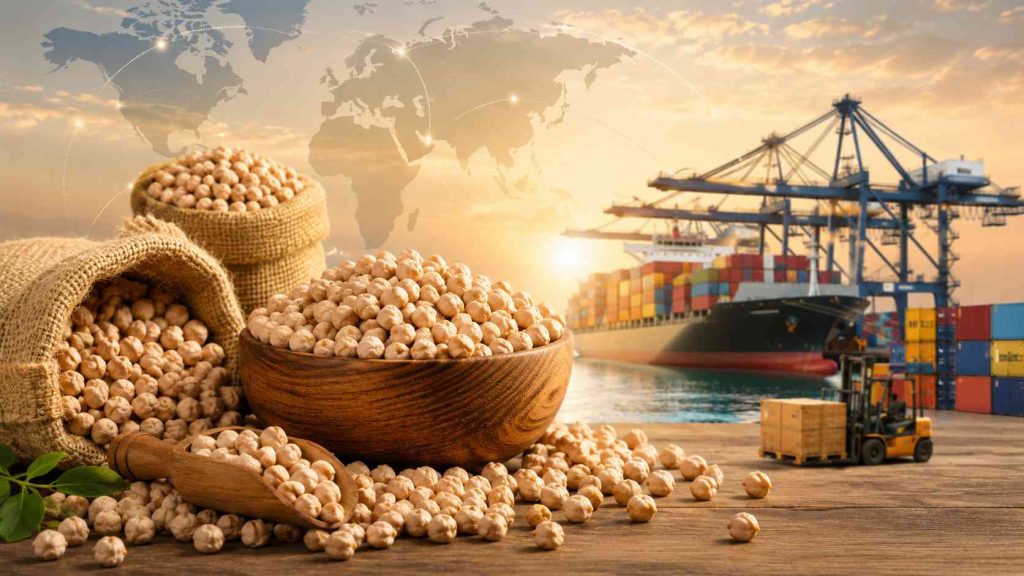


Lentils are one of the most important pulses in international food trade. Their nutritional value, long shelf life, versatility, and widespread use in traditional and modern diets have made them an essential product for importers, food manufacturers, wholesalers, retailers, and food-service companies around the world.
However, the global lentil market is not limited to a single product. Different varieties of lentils have different colors, sizes, cooking characteristics, processing applications, and consumer markets.
For exporters, understanding these differences is essential. A buyer looking for red lentils for large-scale food processing may have completely different requirements from a European retailer looking for premium green or black lentils.
This article explores the main types of lentils, their commercial applications, potential buyers, and some of the most promising export markets worldwide.
Why Lentils Are Important in Global Food Trade
Lentils have been consumed for thousands of years and remain a staple food in many regions, particularly South Asia, the Middle East, North Africa, Europe, and parts of the Americas.
Their international demand is supported by several characteristics:
- High plant-based protein content
- Long storage life
- Easy transportation
- Broad culinary applications
- Suitability for vegetarian and vegan diets
- Increasing use in healthy and convenient foods
- Compatibility with gluten-free food formulations
- Strong consumption in traditional cuisines
The scale of international trade demonstrates the importance of this market.
In 2024, India imported more than 1.06 million tonnes of dried lentils, making it the world’s largest reported importer. Turkey imported approximately 646 thousand tonnes, while the European Union imported about 238 thousand tonnes. Algeria, Egypt, Pakistan, and Sri Lanka were also major importing markets.
For professional exporters, these figures represent substantial opportunities—but success depends on offering the right lentil variety to the right market.
Main Types of Lentils in International Trade
Although many lentil cultivars exist, several commercial categories dominate international food markets.
1. Red Lentils
Red lentils are among the most internationally traded and commercially important lentil products.
Depending on processing, they may be sold as:
- Whole red lentils
- Split red lentils
- Hulled red lentils
- Polished red lentils
After removing the outer seed coat, the inner part usually has an orange, reddish-orange, or yellow-orange appearance.
Main Uses of Red Lentils
Red lentils cook relatively quickly and tend to soften during cooking, making them particularly suitable for:
- Soups
- Purees
- Lentil stews
- Dal
- Ready-to-eat meals
- Instant foods
- Lentil flour
- Food manufacturing
Red lentils are especially important in South Asian, Middle Eastern, and North African cuisine.
Potential Buyers
Major potential buyers include:
- Pulse importers
- Food wholesalers
- Lentil processors
- Split-lentil manufacturers
- Packaged food companies
- Soup manufacturers
- Ethnic food distributors
- Supermarket suppliers
- Food-service distributors
Markets with high consumption of soups, dal, stews, and traditional lentil dishes can be particularly attractive for red lentil exporters.
2. Green Lentils
Green lentils usually maintain their shape better during cooking than red lentils and are widely used in both household and food-service applications.
Depending on variety, they can range from light green to dark green and may be available in different seed sizes.
Main Uses of Green Lentils
Green lentils are commonly used in:
- Salads
- Soups
- Side dishes
- Ready meals
- Grain and pulse mixes
- Vegetarian dishes
- Plant-based foods
- Retail pulse packaging
Because they generally remain relatively firm after cooking, green lentils are attractive for applications where texture and visual appearance are important.
Potential Buyers
Potential customers include:
- Retail food brands
- Supermarket suppliers
- Healthy food companies
- Food-service distributors
- Ready-meal producers
- Plant-based food manufacturers
- Organic and specialty food distributors
- Pulse wholesalers
Green lentils can be especially attractive in European and North American markets where consumers frequently use lentils in salads, healthy meals, and plant-based dishes.
3. Brown Lentils
Brown lentils are one of the most versatile and widely consumed lentil varieties.
Their relatively mild flavor and broad culinary applications make them suitable for both traditional cooking and industrial food production.
Main Uses of Brown Lentils
Brown lentils can be used in:
- Soups
- Stews
- Lentil rice dishes
- Ready meals
- Vegetarian recipes
- Canned products
- Food-service applications
They typically maintain some structure during cooking while becoming sufficiently tender for a wide range of dishes.
Potential Buyers
Potential commercial customers include:
- Importers
- Wholesalers
- Canning companies
- Retail packers
- Food processors
- Restaurants and catering distributors
- Private-label food brands
Because of their versatility, brown lentils can be marketed to both traditional pulse-consuming countries and modern retail markets.
4. Black Lentils or Beluga Lentils
Black lentils, commonly known as Beluga lentils, are small, dark lentils with a distinctive appearance.
They are generally positioned as a more specialized or premium product compared with standard red or brown lentils.
Their name comes from their visual resemblance to beluga caviar after cooking.
Main Uses of Beluga Lentils
Black lentils are frequently used in:
- Premium salads
- Gourmet dishes
- Restaurant meals
- Healthy prepared foods
- Plant-based recipes
- Specialty retail products
- High-value packaged pulse ranges
They tend to hold their shape well during cooking, making them especially suitable for dishes where presentation is important.
Potential Buyers
The most promising customers are often:
- Premium food retailers
- Specialty importers
- Gourmet food distributors
- Organic food brands
- Healthy food companies
- Restaurants
- High-end food-service suppliers
Unlike high-volume red lentil markets, the opportunity for Beluga lentils may depend more on quality, branding, packaging, traceability, and product positioning than on price alone.
5. Split and Hulled Lentils
Processing is another important factor in international lentil trade.
Many buyers purchase lentils that have been:
- Cleaned
- Graded
- Hulled
- Split
- Polished
- Color sorted
Split lentils are particularly important in markets where fast preparation and traditional pulse dishes are common.
Removing the seed coat reduces cooking time and changes the texture of the final product.
For exporters with access to modern processing facilities, offering both whole and processed lentils can significantly expand the number of potential buyers.
Most Promising Markets for Lentil Exporters
Different countries provide different opportunities depending on consumption patterns, local production, processing capacity, price sensitivity, and buyer requirements.
India: The World’s Largest Import Opportunity
India represents one of the most important markets in the global pulse industry.
Lentils are widely used in Indian cuisine, particularly in dal and other traditional dishes.
In 2024, India imported approximately 1.06 million tonnes of dried lentils with a reported trade value exceeding US$811 million, making it the largest importer recorded in international trade data for that year.
For exporters capable of supplying competitive volumes, India can represent an enormous market.
Potential customers include:
- Large pulse importers
- Commodity traders
- Dal processors
- Wholesalers
- Packaging companies
- Food manufacturers
However, exporters targeting India should closely monitor local crop conditions, tariffs, government policies, import regulations, and seasonal market conditions because these factors can significantly influence import demand.
Turkey: A Major Importer and Processing Hub
Turkey is another highly important market in global lentil trade.
In 2024, Turkey imported approximately 646.5 thousand tonnes of dried lentils, valued at nearly US$460 million.
Turkey is attractive not only because of domestic consumption but also because it has an established pulse processing, packaging, and regional trading industry.
Potential opportunities include supplies for:
- Lentil processors
- Split-lentil facilities
- Export-oriented traders
- Food wholesalers
- Retail brands
- Industrial food companies
Turkey’s geographical position also makes it an important commercial connection between producing countries and markets across Europe, the Middle East, and North Africa.
European Union: Large Market with Strong Quality Requirements
The European Union is one of the world’s largest lentil import markets.
In 2024, the EU imported approximately 237.7 thousand tonnes of dried lentils, worth nearly US$288 million. Major suppliers included Canada, Turkey, the United States, Russia, and Kazakhstan.
Europe is particularly interesting because demand is spread across several customer segments:
- Traditional pulse consumers
- Vegetarian and vegan consumers
- Healthy food brands
- Organic food retailers
- Food manufacturers
- Private-label supermarket suppliers
- Ready-meal producers
Italy
Italy imported approximately 55.4 thousand tonnes of lentils in 2024, worth more than US$63 million. Canada and Turkey were among its leading suppliers.
Italian consumers use lentils in traditional cuisine, while retailers and food companies also sell a wide variety of packaged pulse products.
Spain
Spain imported approximately 48.7 thousand tonnes in 2024, with Canada and the United States supplying a significant share of the market.
The country can offer opportunities for both standard lentils and retail-oriented products.
France
France imported approximately 42.2 thousand tonnes of dried lentils in 2024.
Premium, specialty, organic, and traceable pulse products can be particularly relevant for buyers in developed European food markets.
Algeria: A High-Volume North African Market
North Africa represents an important region for lentil exporters due to strong traditional consumption and dependence on imported pulses.
Algeria was among the world’s largest lentil importers in 2024, purchasing approximately 155 thousand tonnes, worth nearly US$200 million.
The market can provide opportunities for:
- Bulk lentil exporters
- Commodity suppliers
- Local wholesalers
- Food distributors
- Retail packaging companies
Competitive pricing, reliable logistics, and consistent supply are especially important when targeting high-volume markets of this type.
Egypt: Strong Traditional Demand
Egypt is another significant North African market.
In 2024, the country imported approximately 126.9 thousand tonnes of dried lentils, according to international trade data.
Russia, Turkey, Kazakhstan, and Ukraine were among important suppliers to Egypt during the year.
Lentils are widely used in Egyptian cuisine, including soups and traditional dishes, creating consistent demand from importers and wholesalers.
Potential buyers include:
- Food importers
- Pulse wholesalers
- Retail packers
- Food-service distributors
- Food manufacturers
Pakistan and Sri Lanka
South Asian markets should also be considered by lentil suppliers.
In 2024, Pakistan imported approximately 181 thousand tonnes, while Sri Lanka imported nearly 165 thousand tonnes of dried lentils.
These countries have established pulse consumption cultures, making red and split lentils particularly relevant.
Exporters targeting these markets often need to compete strongly on:
- Price
- Grain specifications
- Processing quality
- Freight cost
- Payment terms
- Reliable shipment schedules
United Kingdom
The UK provides an interesting combination of traditional pulse consumption and modern healthy-food demand.
In 2024, the United Kingdom imported dried lentils worth approximately US$54.9 million. Its major suppliers included India, Canada, and Turkey.
Potential buyer categories include:
- South Asian food wholesalers
- Middle Eastern food distributors
- Supermarkets
- Private-label packers
- Healthy food brands
- Ready-meal manufacturers
- Vegan and vegetarian food companies
Red lentils may appeal strongly to traditional and ethnic food channels, while green, brown, and black lentils can also target premium retail and health-oriented consumers.
United States
The United States is both a lentil-producing country and an importer.
In 2024, the US imported approximately 87.7 thousand tonnes of dried lentils, worth about US$85.6 million, with Canada supplying the majority of the volume.
Opportunities can exist for differentiated products such as:
- Specialty lentils
- Organic lentils
- Premium packaged products
- Ethnic food products
- Processed lentils
- Lentil ingredients for food manufacturing
The growth of plant-based foods and demand for convenient protein-rich ingredients may also create opportunities for suppliers able to meet strict quality and regulatory requirements.
Matching Lentil Varieties with Export Markets
Choosing a market should not be based only on total import volume. Exporters need to understand which type of lentil each customer actually requires.
A practical market approach could include:
Red and split lentils:
India, Pakistan, Sri Lanka, Turkey, Egypt, Middle Eastern markets, and ethnic-food channels in Europe and the UK.
Green lentils:
European markets, the UK, North America, food-service companies, retail brands, and healthy-food manufacturers.
Brown lentils:
Europe, the Middle East, North Africa, North America, wholesalers, retailers, and general food processors.
Black or Beluga lentils:
Premium European retailers, specialty food distributors, gourmet restaurants, healthy-food brands, and selected North American customers.
This segmentation allows exporters to develop more targeted sales offers rather than treating all lentils as a single commodity.
What Do International Lentil Buyers Look For?
Professional buyers usually evaluate much more than price.
Consistent Size and Appearance
Uniformity is especially important for retail packaging and food manufacturing.
Buyers may specify:
- Seed size
- Color
- Variety
- Split percentage
- Broken grains
- Foreign matter
- Damaged grains
- Discoloration
Moisture Level
Proper moisture control is important for maintaining product stability and reducing storage risks during international transportation.
Purity and Cleaning
Well-cleaned lentils with low levels of foreign material are more attractive to professional buyers.
Modern cleaning and color-sorting equipment can provide a significant commercial advantage.
Cooking Performance
Cooking time, texture, water absorption, and the ability to retain shape can be important depending on the final application.
A food manufacturer may evaluate lentils differently from a commodity wholesaler.
Food Safety
Exporters must comply with the food-safety and import regulations of the destination country.
Depending on the market, buyers may require testing or documentation relating to:
- Pesticide residues
- Contaminants
- Microbiological parameters
- Traceability
- Product origin
- Quality management systems
Packaging Options
Different markets require different packaging formats.
Exporters may need to provide:
- Bulk bags
- Industrial packaging
- Standard export sacks
- Retail packs
- Private-label packaging
Offering flexible packaging solutions can open access to additional customer segments.
Who Are the Best Potential Buyers for Lentil Exporters?
Instead of searching only for general “lentil buyers,” exporters can target specific commercial categories.
These include:
- Pulse importers
- Commodity trading companies
- Lentil processors
- Wholesalers
- Food manufacturers
- Soup manufacturers
- Ready-meal producers
- Canning companies
- Retail packaging companies
- Private-label suppliers
- Ethnic food distributors
- Plant-based food manufacturers
- Organic food brands
- Food-service distributors
Understanding the buyer’s business model allows an exporter to prepare a more relevant commercial proposal.
A commodity trader may prioritize price and volume, while a premium retail company may care more about appearance, certifications, packaging, consistency, and traceability.
Building a Successful Lentil Export Strategy
The existence of a large import market does not automatically mean it is the best destination for every exporter.
Before entering a market, suppliers should evaluate:
- Annual import demand
- Target lentil variety
- Customer specifications
- Local competitors
- Major supplying countries
- Import duties
- Food regulations
- Shipping costs
- Transit time
- Payment conditions
- Required certifications
- Packaging requirements
- Seasonal demand
Exporters should also avoid competing only on price.
Reliable communication, product consistency, transparent specifications, accurate documentation, and dependable delivery can become major competitive advantages in international B2B trade.
From Commodity Supply to Long-Term Partnerships
The most valuable opportunity in international lentil trade is not necessarily a single large shipment.
Long-term commercial relationships can provide greater stability for both the supplier and the buyer.
A professional exporter should therefore aim to provide:
- Clearly defined product specifications
- Consistent quality between shipments
- Competitive and transparent quotations
- Accurate export documentation
- Flexible packaging options
- Reliable logistics
- Responsive communication
- Traceability
- Samples when required
- Long-term supply capability
These factors help transform a supplier from a simple commodity seller into a reliable sourcing partner.
Conclusion
The international lentil market offers substantial opportunities for exporters, but different varieties serve different customers and markets.
Red lentils are particularly important for high-volume traditional markets and food processing. Green and brown lentils serve a broad range of retail, food-service, and manufacturing applications, while black or Beluga lentils can provide access to premium and specialty food segments.
In terms of market potential, countries and regions such as India, Turkey, the European Union, Algeria, Egypt, Pakistan, Sri Lanka, the United Kingdom, and the United States deserve attention from suppliers developing an international lentil export strategy.
Successful exporters understand that global demand alone is not enough. The right combination of product variety, quality specifications, pricing, processing, packaging, logistics, documentation, and customer understanding is what turns market potential into sustainable international business.
Looking for a reliable supplier of red, green, brown, or Beluga lentils? Legumeland provides professional sourcing and export solutions tailored to the specifications, quantities, packaging requirements, and destination markets of international buyers. Contact us to discuss your lentil sourcing requirements and potential business cooperation.